
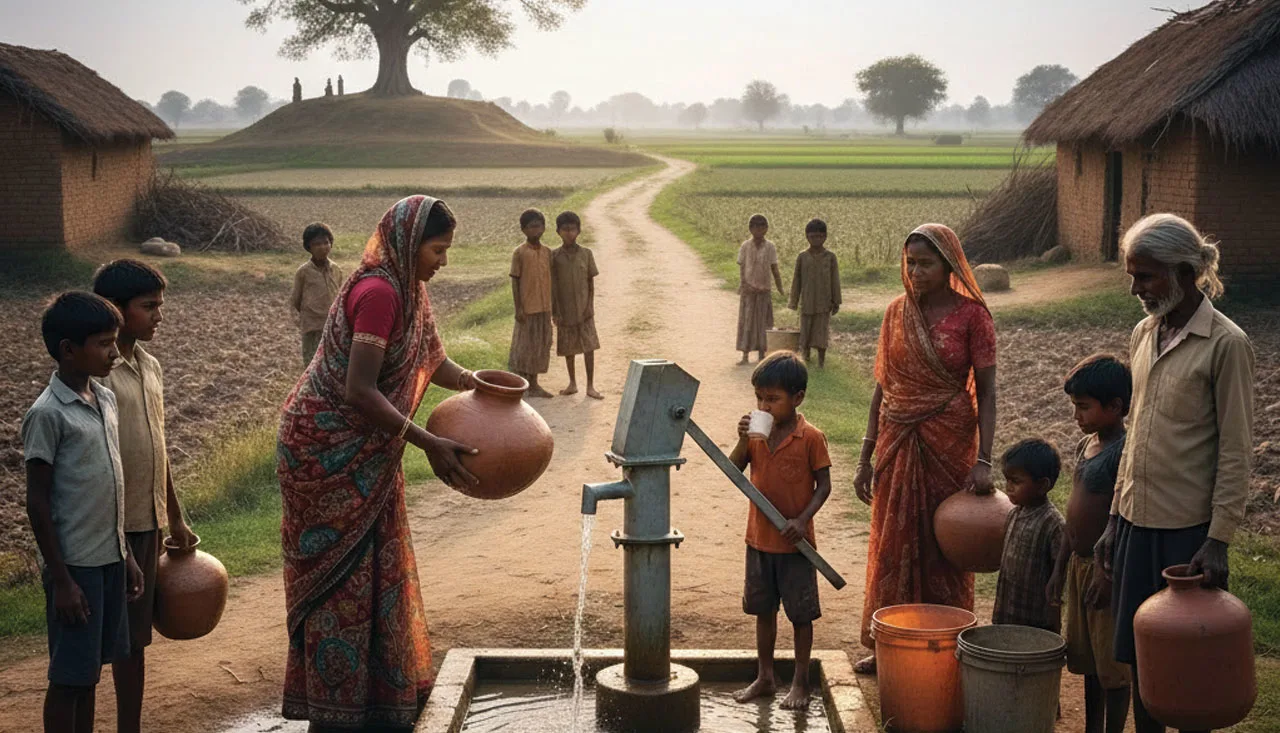
Practical guide for NGOs, panchayats, gram sabhas, CSR teams and rural entrepreneurs on affordable, sustainable rural drinking-water solutions. What works, how to start, and how to keep it running.
Why we still need better rural drinking water
Millions of rural households face intermittent supply, poor water quality, and falling groundwater. Solutions that are cheap but short-lived (hand-pumps without recharge, or expensive tech without maintenance plans) fail fast. The right approach blends simple tech, community ownership, water-source protection, and regular maintenance and that’s where aquafiers, rainwater harvesting, solar pumps and community treatment systems shine.
1) Quick overview of proven solutions Aquafiers (Aquifer Recharge + Storage) :
A local system that collects surplus surface water (monsoon/run-off) and channels it into the ground, recharging aquifers so wells and tube wells recover faster and provide safer water through the year. Works best where geology permits infiltration and where there’s seasonal run-off to capture.
Rainwater harvesting (Rooftop + Recharge) :
Rooftop collection for immediate use (clean drinking water after simple filtration) and recharge structures (soak pits, recharge wells) to rebuild groundwater. Easy to scale from single households to schools and community buildings.
Solar-powered pumps (for safe abstraction) :
Replace diesel or unreliable grid pumps with solar. Lower running costs, less pollution. Best when paired with storage (tanks) and a distribution plan.
Community water treatment (decentralized) :
Small-scale treatment like chlorination, slow sand filters, or RO units sized for a village. Perfect when source quality needs polishing (iron, saline intrusion, microbial contamination).
Nature-based options (wetlands, check dams) :
Small check dams, contour bunds, and soaking trenches reduce run-off and increase percolation, cheaper and climate-resilient.
2) How to choose the right mix
- Check the problem: Is it quantity (not enough water) or quality (unsafe water)?
- Quantity → recharge + storage (aquafier, rainwater harvesting, check dams).
- Quality → treatment (filtration, chlorination, community RO if needed).
- Understand the source: Shallow wells respond well to recharge; fractured rock or deep aquifers need geotech advice.
- Consider cost & capacity: Household-level systems are cheapest per family; community systems often deliver better quality control and centralized maintenance.
- Plan for maintenance & governance: Any tech without a local operator and a small tariff or maintenance fund will fail.
3) Example system: Village-scale, low-maintenance blueprint
- Source: Rooftop + nearby seasonal run-
- Capture: Gutters to settle tank (for solids).
- Storage: 10–20 kL covered tank (varies with village size).
- Treatment: Multi-stage: coarse filter → sand filter → chlorine dosing (or UV where electricity okay).
- Distribution: Gravity or solar pump to public tap-
- Recharge: Percolation trench or recharge well to push surplus to
- Governance: Village Water Committee collects a small user fee (₹10–50/month per household) for maintenance and operator salary.
4) Aquafier spotlight
An aquafier approach integrates recharge and managed extraction:
- Capture excess water (monsoon run-off or treated grey-water).
- Direct it into recharge wells lined with filter media to prevent
- Monitor groundwater levels and water
- Manage pumping schedules so extraction doesn’t exceed
Benefits : longer groundwater availability, lower fluoride/salinity risk in some zones, and lower dependency on diesel. Downside: needs initial hydrogeological assessment and community buy-in.
5) Costs & financing
- Household rainwater harvesting & basic filtration: low (tens of thousands INR).
- Community tank + simple treatment + piped taps: moderate (lakhs INR depending on capacity).
- Solar pumps: moderate to high upfront but low operating
- Aquifer recharge structures/check dams: varies widely by size and
Funding sources to explore: central/state water schemes, MGNREGA (labour for earthworks), CSR funds, micro-loans, and community contributions. Always budget a 10–20% annual maintenance/operation fund.
6) Maintenance & community ownership
- Train 2–3 local
- Create a simple logbook (daily checks for turbidity, pump hours).
- Set up a maintenance fund with clear
- Monthly community meetings to review supply, tariffs, and
- Partner with a local NGO or company for technical backups & periodic water
7) Quick checklist to start a pilot
- Map water sources & seasonal
- Do a basic water quality test (TDS, pH, iron, nitrates, coli).
- Pick one hamlet as a pilot (50–150 households).
- Design a simple capture + storage + treatment
- Train operators & set up a maintenance
- Monitor: groundwater levels, quality, user satisfaction for 12
8) Case-building tips for Greenre (if you’re implementing)
- Combine technical fixes (aquafier + solar pump) with behavioural change (safe storage, point-of- use practices).
- Document results: water levels before/after, number of days with supply, health indicators (if available).
- Use small wins (school water supply, a reliable tappoint) to build trust.
Rural drinking water solutions don’t need to be flashy. They need to be appropriate, affordable, and owned by the community. Aquafiers and recharge systems restore the resource; rainwater harvesting and decentralized treatment make water safe now; solar pumps and transparent governance keep systems running. Start small, measure, and scale what actually works.